
01
Not Every Account Can Be Recovered
Some Google Ads suspensions can be resolved. Others may already be too heavily restricted, too heavily reviewed, or no longer eligible for successful reinstatement.
We assess recoverability and professionally manage the appeal process — including 7-day post-restoration support to help keep your account stable.
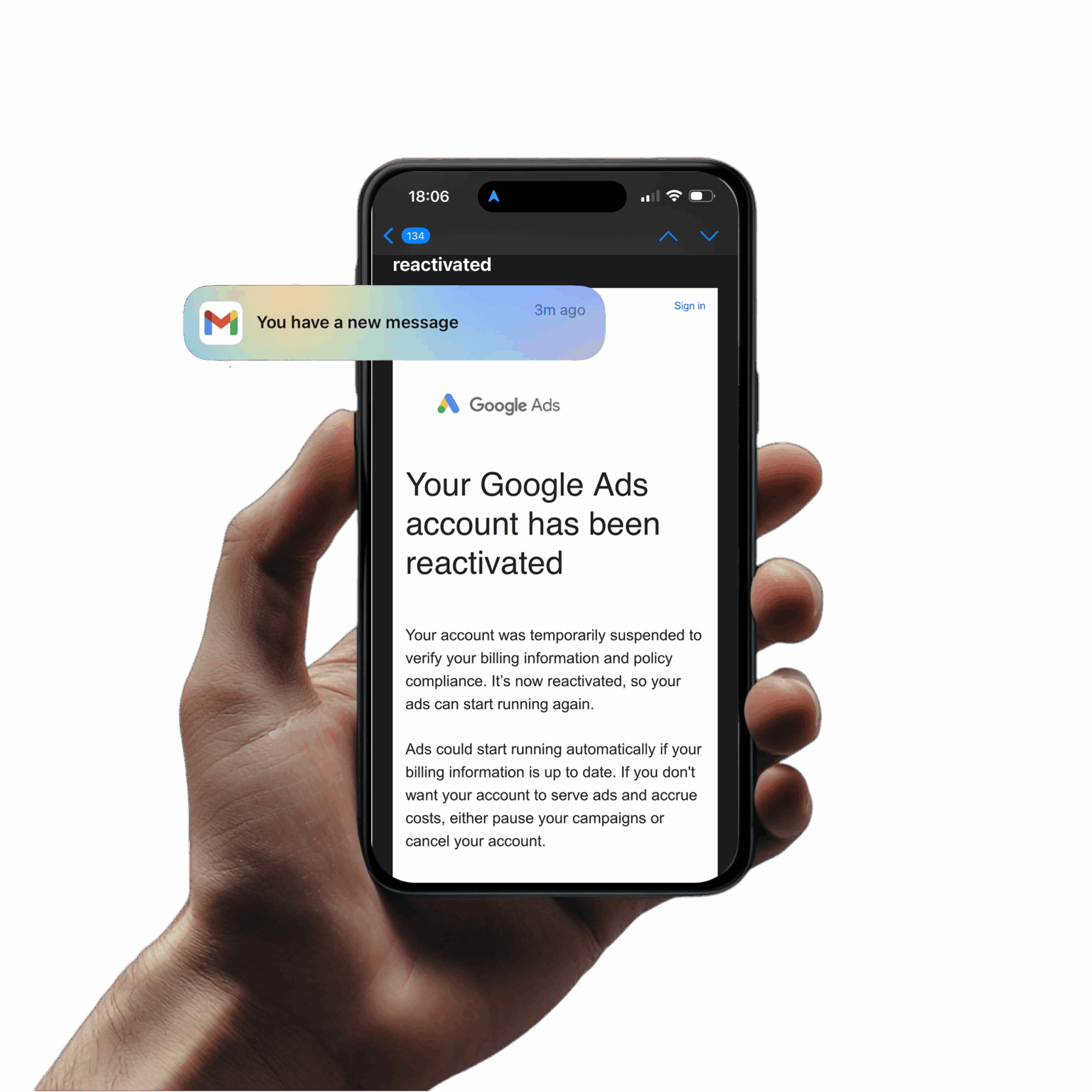
Suspension Signals
Most advertisers submit appeals that are emotional, vague, or incomplete. Google reviewers expect structured explanations supported by policy-aligned evidence.

Google does not suspend accounts solely because a rule was broken. Its systems evaluate whether an advertiser presents a potential risk to users.
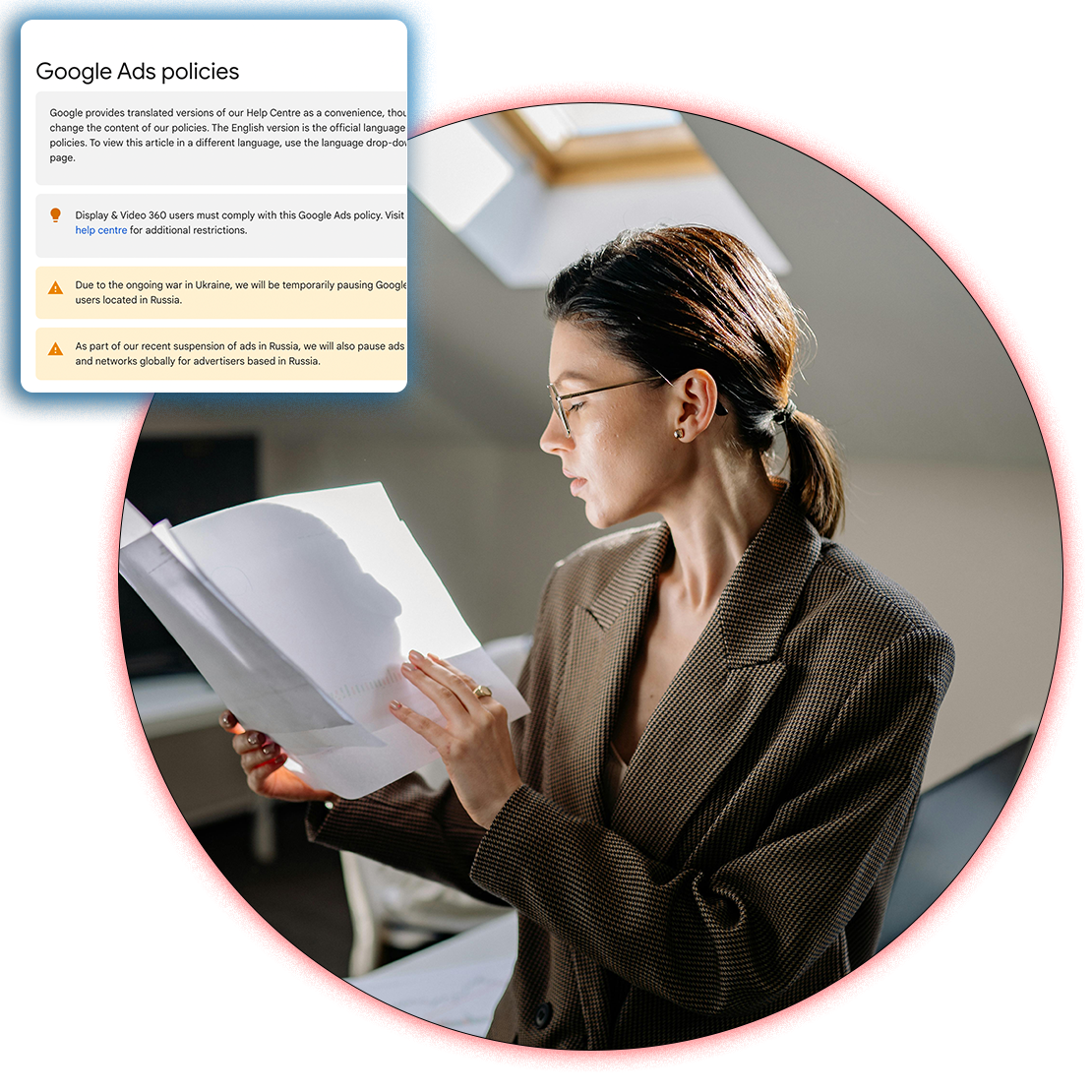
Suspensions are rarely triggered by ads alone. Google evaluates websites, business verification data, account behaviour, and payment signals.
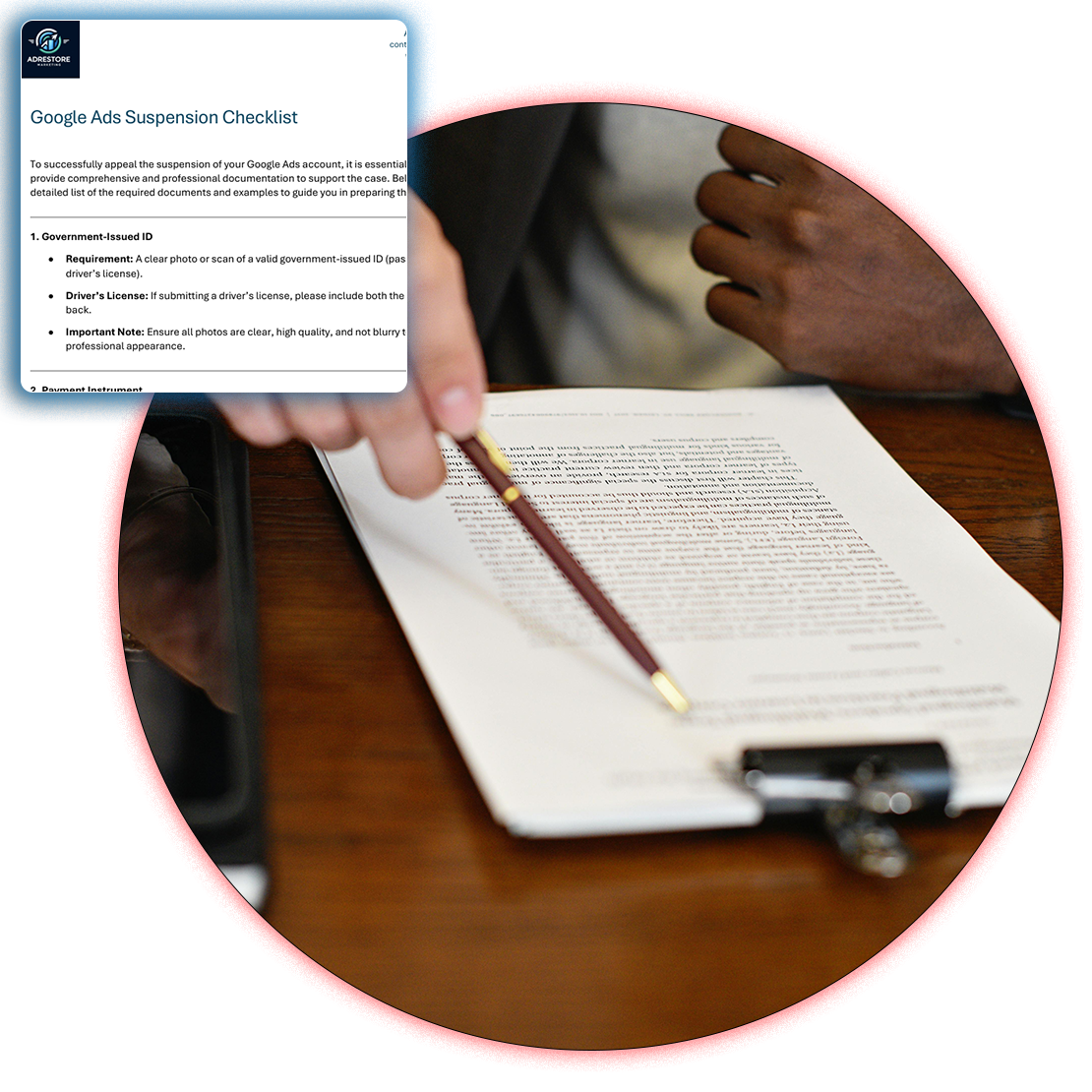
Successful appeals typically include documentation confirming business legitimacy and demonstrating policy compliance.
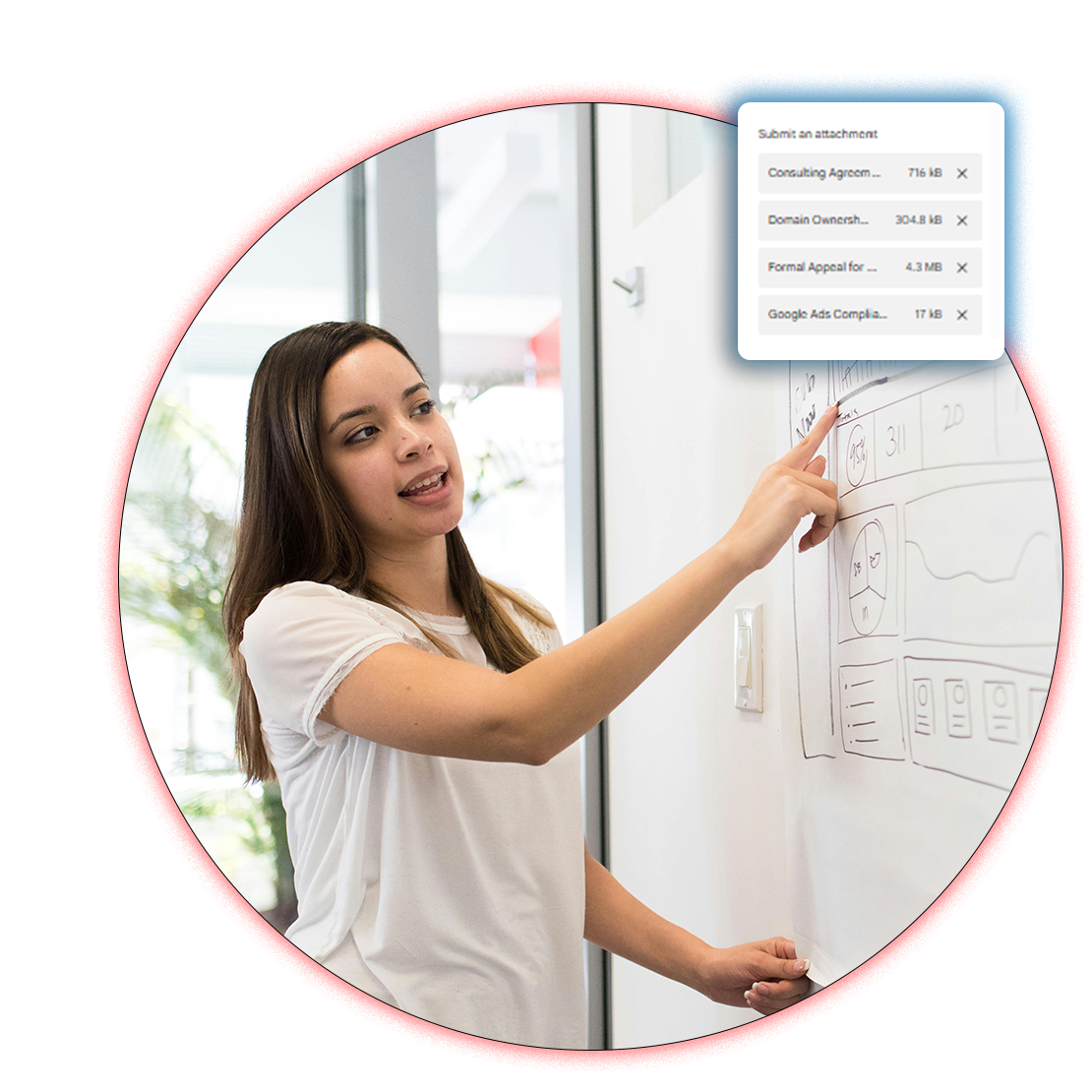
Appeals that clearly explain the issue, reference policies, and include supporting documentation are more likely to receive meaningful review.

Some suspensions permanently restrict accounts from advertising again. Eligibility must be assessed before submitting further appeals.
Google evaluates whether an advertiser presents potential risk to users. These signals may include website transparency, account behaviour patterns, and policy risk indicators.
Landing pages, business verification details, account activity, and payment signals may all be evaluated when reviewing a suspended account.
Appeals that include documentation confirming business legitimacy and demonstrating compliance with policies carry stronger credibility.
Clear explanations, policy references, and documented corrective actions help reviewers understand the steps taken to resolve the issue.
Some suspensions involve permanent policy restrictions. Determining eligibility for recovery requires analysing the suspension reason and account history.
FOUR-STEP FRAMEWORK
A structured approach to Google Ads reinstatement — from identifying the suspension trigger to restoring account stability.
The first step is identifying the exact policy trigger and reviewing all risk signals connected to the account.
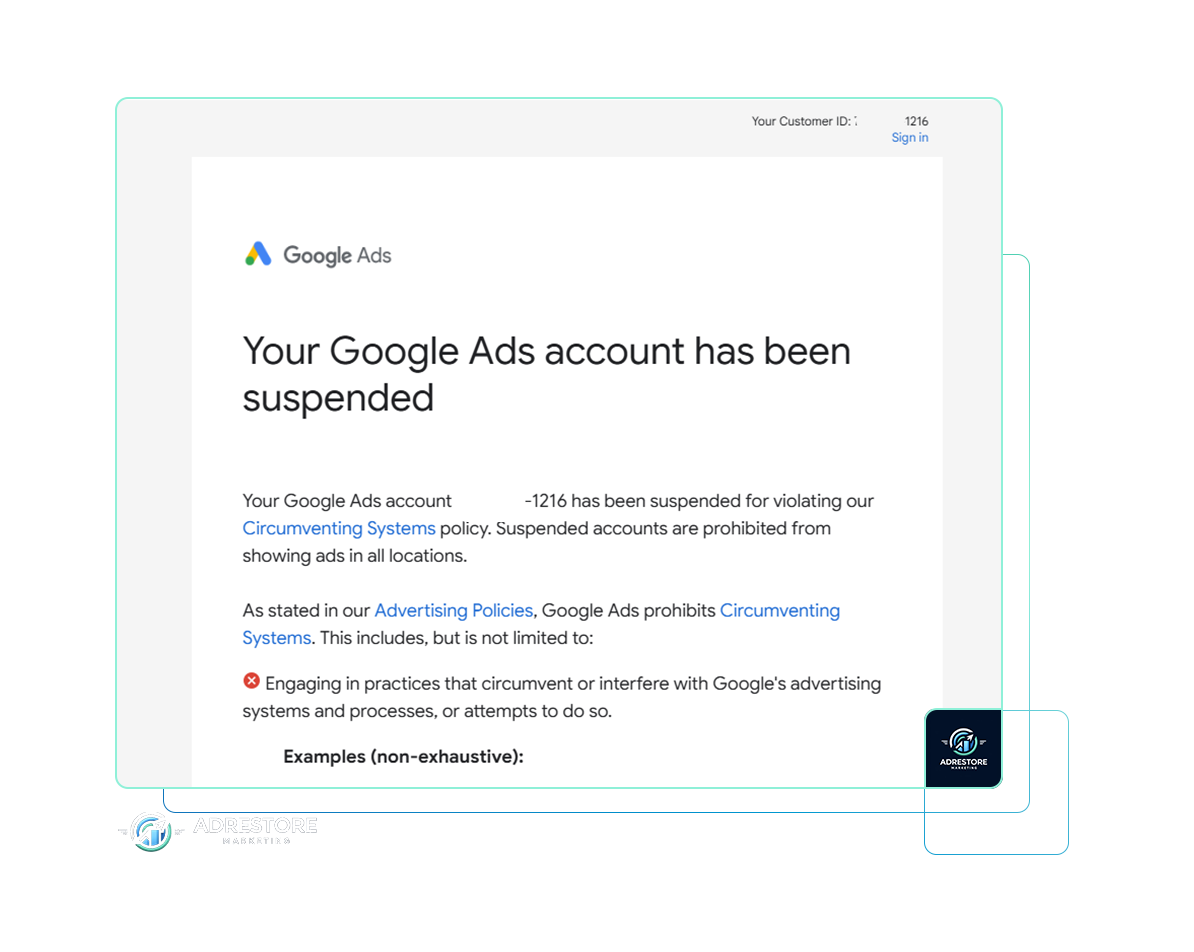
Google Ads suspension notification received.
Proof
Examples of real suspension outcomes, reinstatement confirmations, and restored account access after structured review preparation.
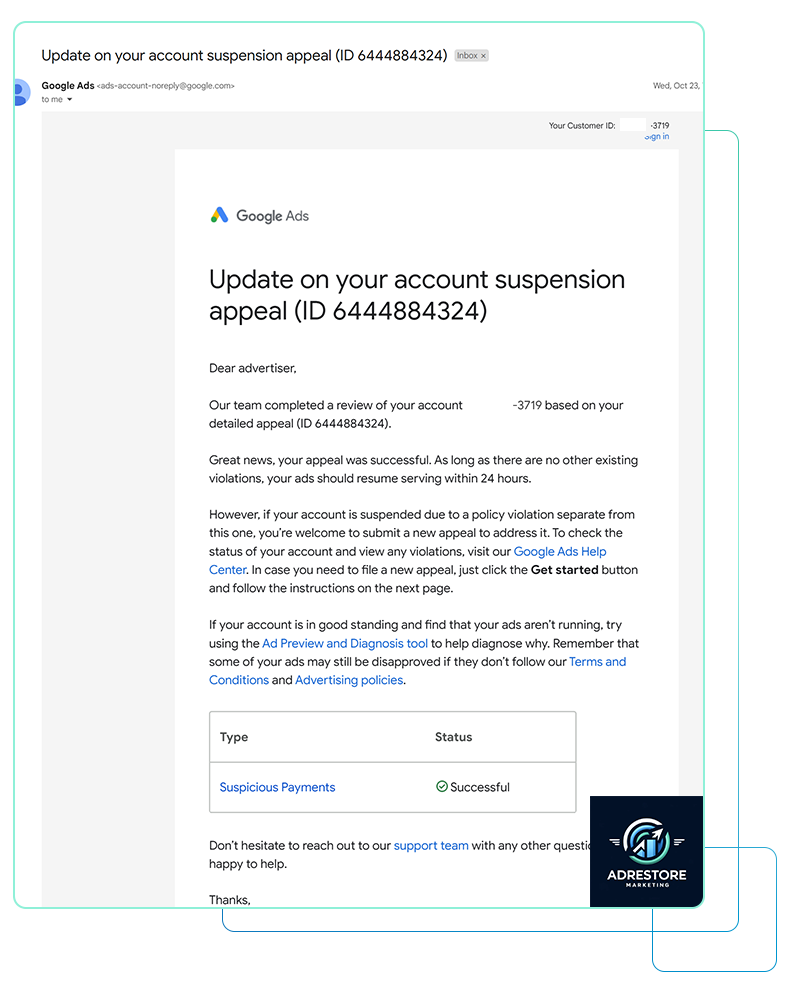
Appeal Successful — Suspicious Payments
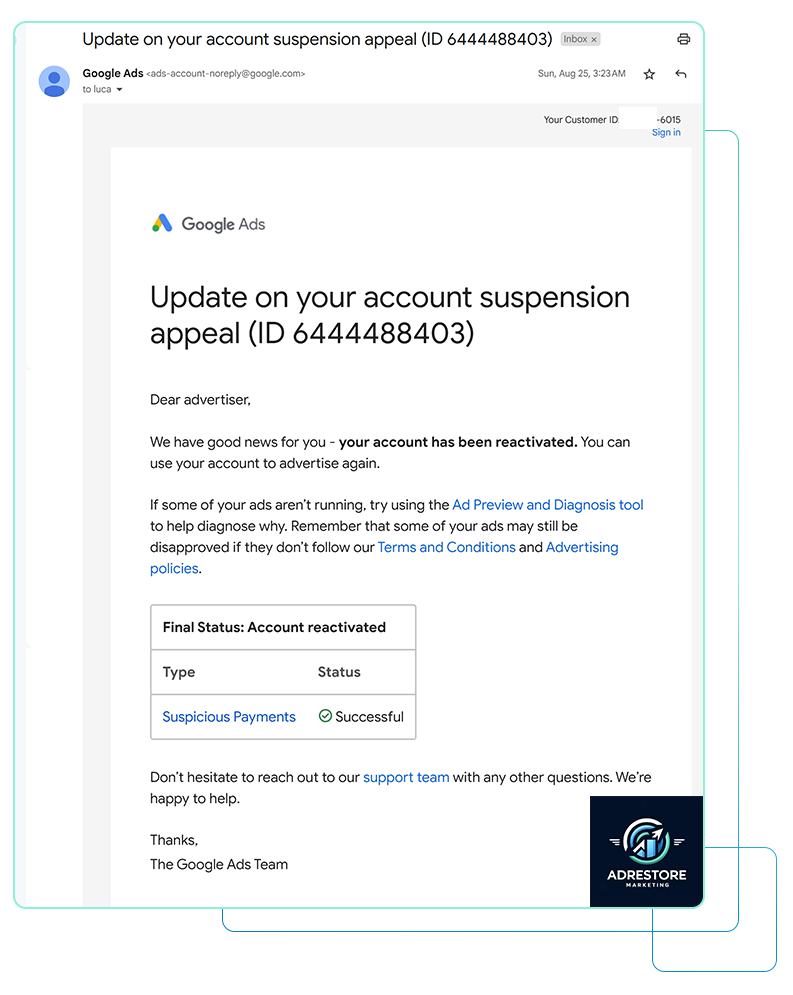
Account Reactivated
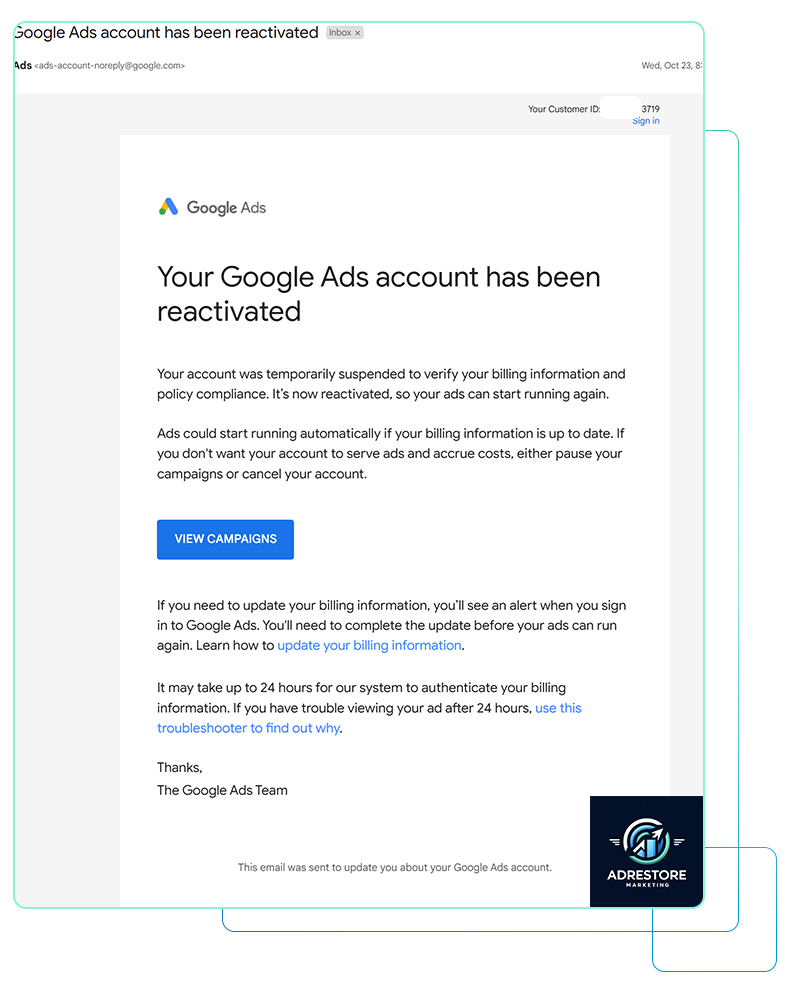
Reactivation Confirmation
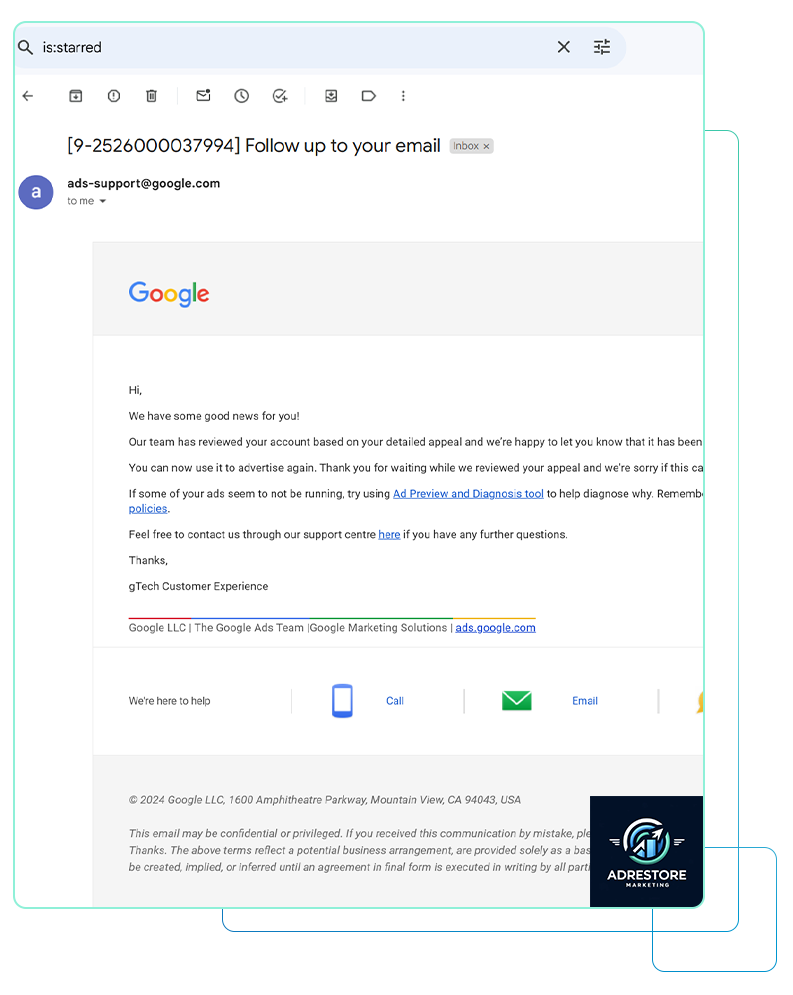
Support Confirmation Email
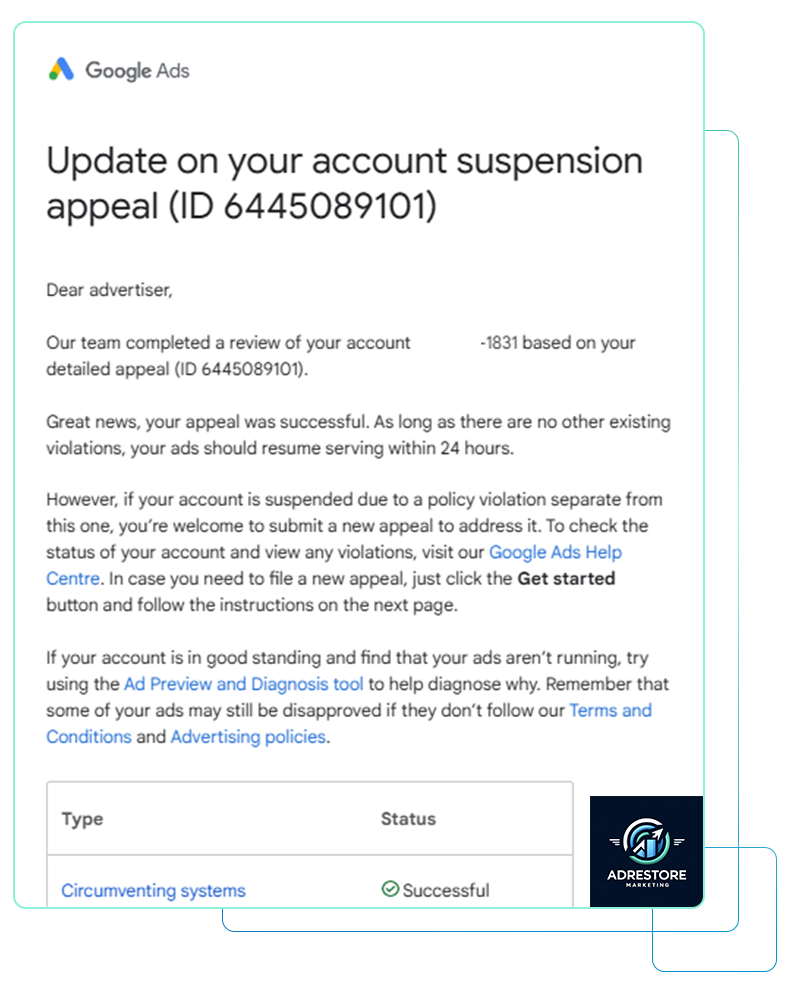
Appeal Successful — Circumventing Systems
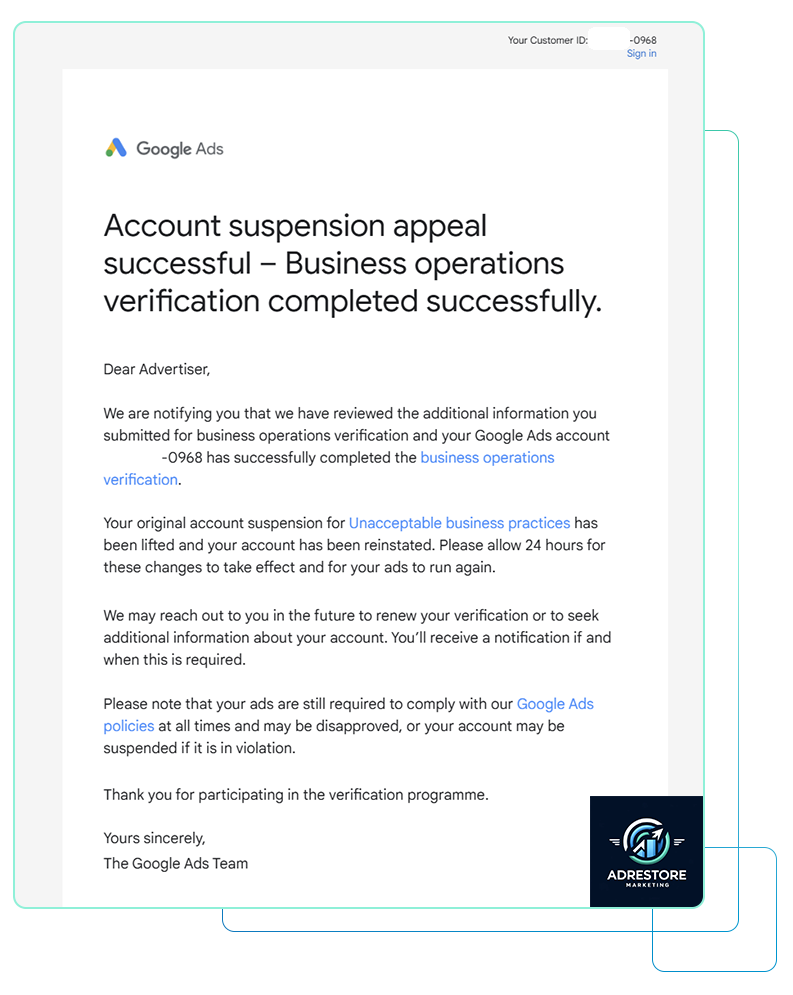
Business Operations Verification Completed
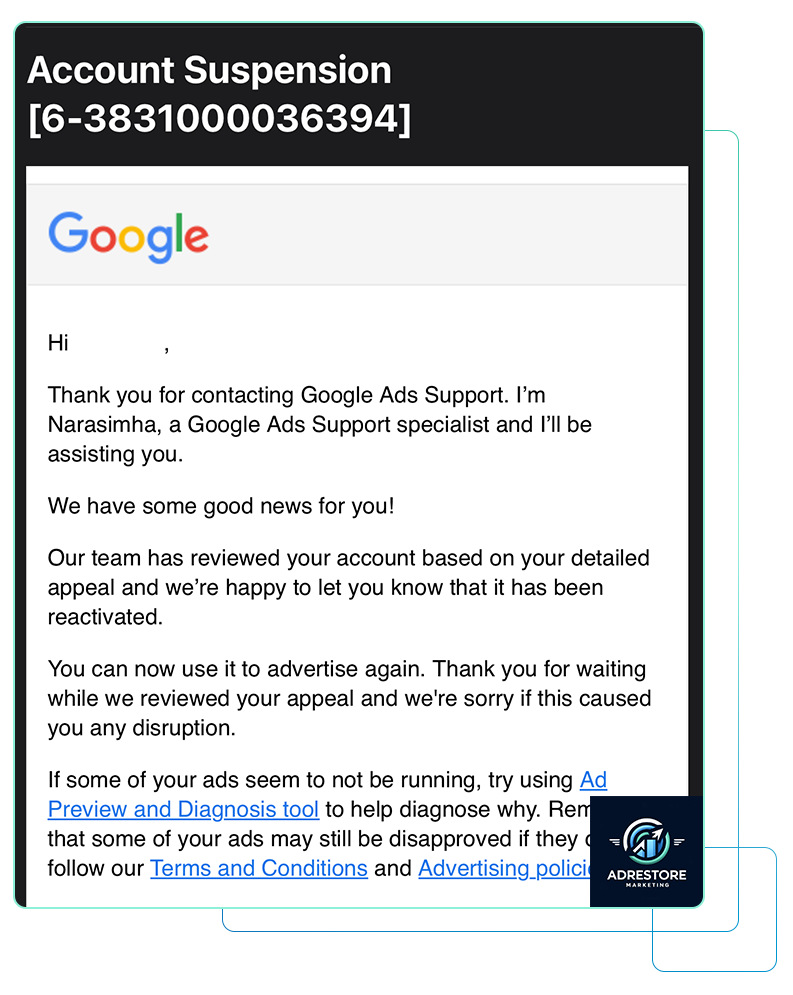
Account Reinstated After Appeal
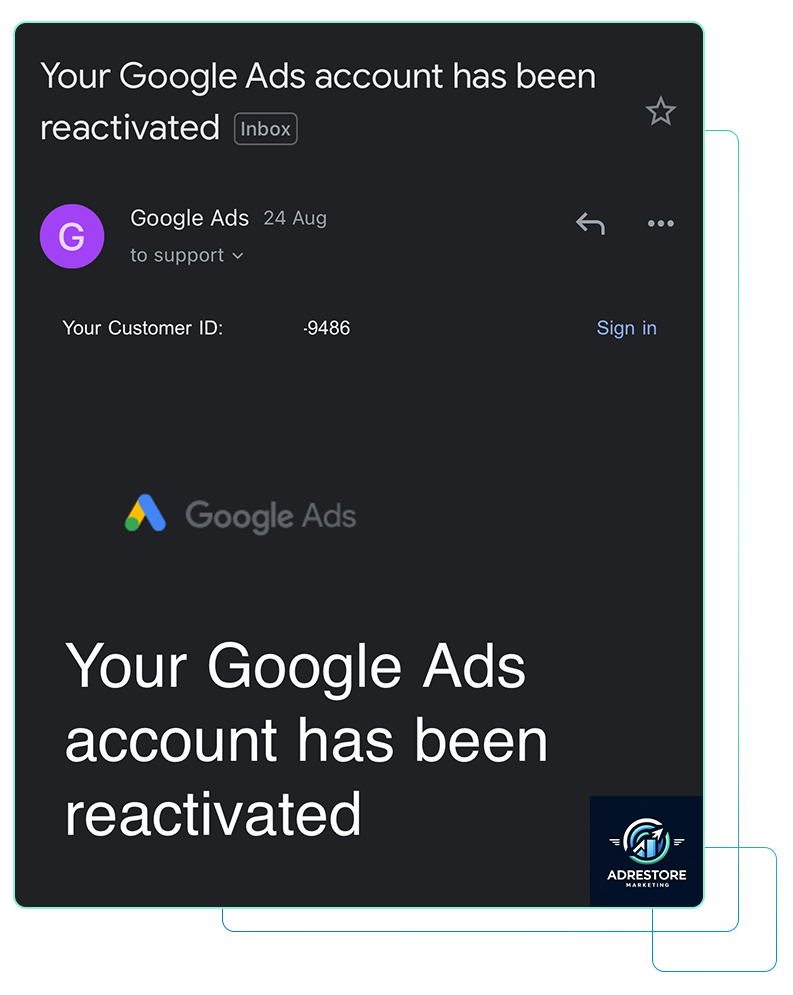
Account Reactivated Notification
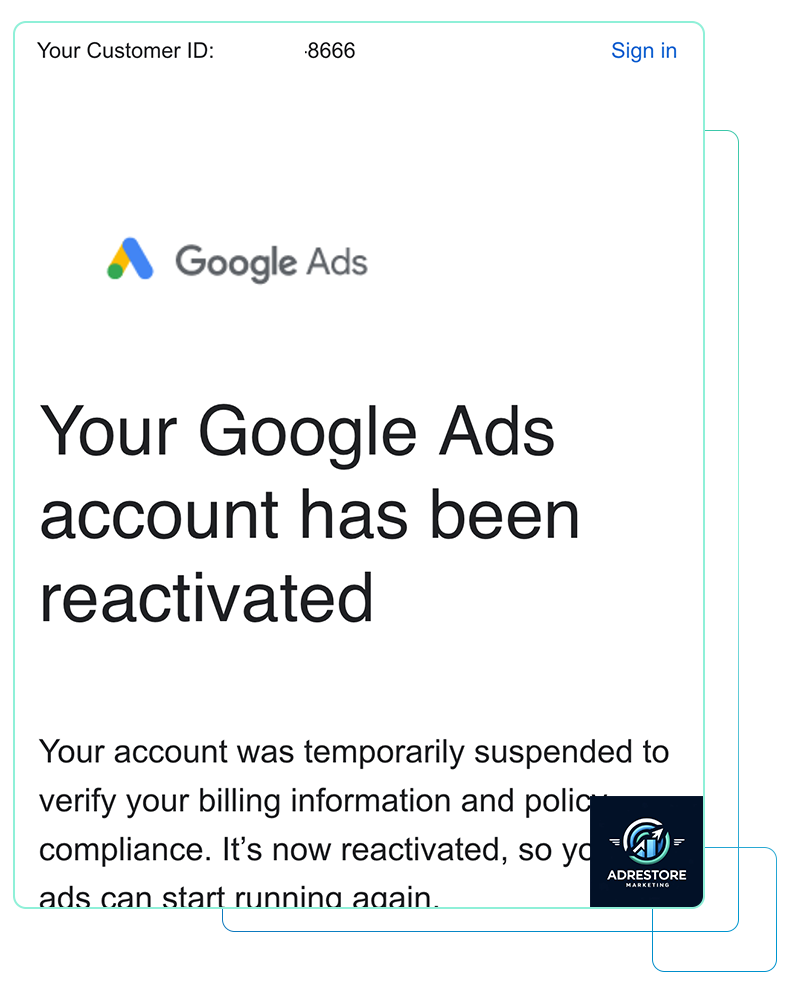
Ads Delivery Restored
Risk & Expectations
Google Ads suspension reviews follow strict internal policies. Not every suspended account is eligible for reinstatement, which is why recoverability should be assessed before further action is taken.
Some Google Ads suspensions can be resolved. Others may already be too heavily restricted, too heavily reviewed, or no longer eligible for successful reinstatement.
Repeated, emotional, or poorly structured submissions can weaken the review position and make future recovery attempts more difficult.
Each case should be reviewed before any next step is taken, to determine whether the suspension appears recoverable and whether submission is appropriate.
If a case appears too limited, too risky, or unlikely to succeed, that will be explained clearly rather than oversold.
The purpose of the review is to assess recoverability before additional mistakes are made and to determine whether a structured appeal path is still viable.
CONSULTATION
Provide a few details about the suspension and continue to schedule a 30-minute review where we assess the policy trigger and determine whether recovery is realistically possible.

Speak directly with Gianluca
Google Ads suspension specialist who will personally review your account and determine whether recovery is realistically possible.
We inspect the suspension context, account history, and visible business signals to understand what may have triggered the issue.
We assess likely recoverability and identify whether the case appears viable before any structured appeal work begins.
You receive a clear outline of what should happen next, whether that means proceeding with recovery work or being told directly that the case is unlikely to succeed.
This is not a generic sales call. It is a live suspension eligibility review focused on clarity, risk, and next-step direction.
We examine whether the suspension is potentially recoverable, what documentation or structural fixes may be required, and whether it makes sense to proceed.
If the account does not appear viable, that will be stated directly.
Due to manual case preparation, only a limited number of new suspension cases are reviewed each week.
FREQUENTLY ASKED QUESTIONS
Clear answers about the suspension review process, recovery eligibility, and what to expect during your consultation.
Yes — many suspended accounts can be restored when the underlying policy trigger is correctly identified and addressed. However, not every suspension is recoverable. Some accounts become permanently ineligible if multiple incorrect appeals were submitted before the real issue was fixed.
During the Suspension Eligibility Review we inspect the suspension reason, account structure, policy signals, website compliance, and past appeal attempts. From this we determine whether the account is likely recoverable, possibly recoverable, or unlikely to be recovered.
No. Access is typically provided through Google Ads Manager (MCC) access which allows account inspection without requiring your password. You remain in full control of your account.
During the consultation we inspect the suspension trigger, review account history, check website compliance, identify policy risks, and determine whether recovery appears realistic.
Google review times vary depending on the suspension category. Most reviews take between 3–7 days, while complex policy cases may take up to 14 days.
If the suspension appears unlikely to be recoverable we will tell you during the eligibility review before any work begins.
Most appeals fail because the real policy trigger was never identified. Submitting emotional explanations, repeating appeals, or ignoring website compliance issues often results in rejection.
Yes. Submitting multiple appeals without fixing the root cause can reduce the likelihood of future reviews and in some cases Google may stop reviewing appeals entirely.
Pricing depends on the suspension type and case complexity. During the consultation we explain whether recovery appears realistic and what the next steps would involve.
Ideally you should have your Google Ads Customer ID, affected domain, and the suspension email from Google. If you don't have everything available we can still review the situation during the call.
Still unsure if your account can be restored?